
Reflections on Three Seasons in the Forest
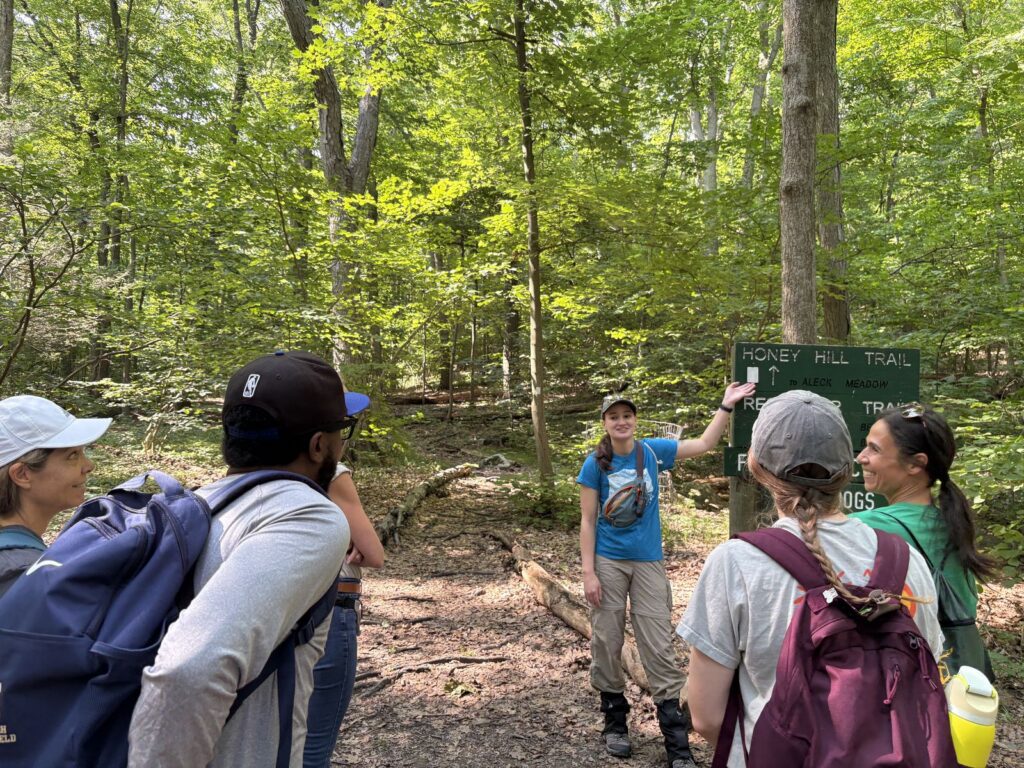
In my ten months on the Education team at Black Rock Forest, I’ve come to realize that this place holds unique opportunities for environmental education. Environmental education can, and should, happen in any outdoor space. Even the most human-impacted landscapes contain pockets of nature that can captivate and engage students. Having worked in urban parks in all five boroughs of New York City, I know this well. But there’s an extra benefit in going beyond the basics—not just getting kids outdoors in fresh air and nature, but introducing them to a healthy, functioning ecosystem rich in biodiversity.
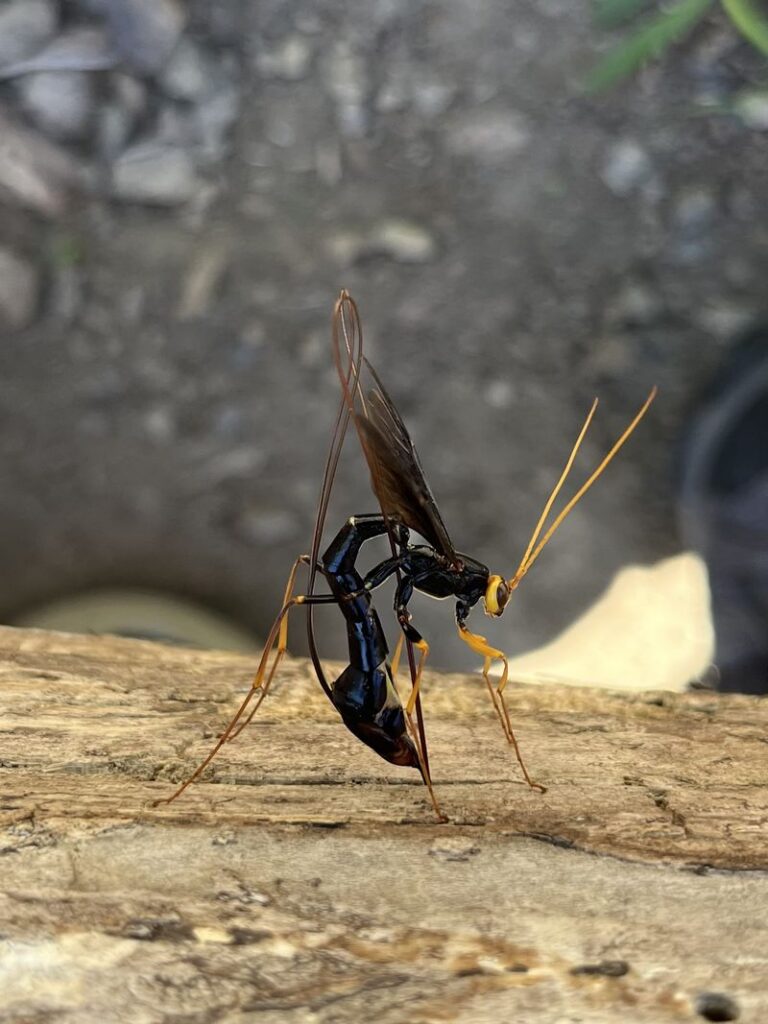
Where else can one break off a conversation about water conservation to show students the giant ichneumonid wasps drilling their ovipositors centimeters deep into a log bench to lay their eggs in horntail sawfly larvae? Instead of comparing pictures on a screen, students trek to the vernal pool to observe firsthand the differences between the chia seed-like egg masses of wood frogs and the cloudy,
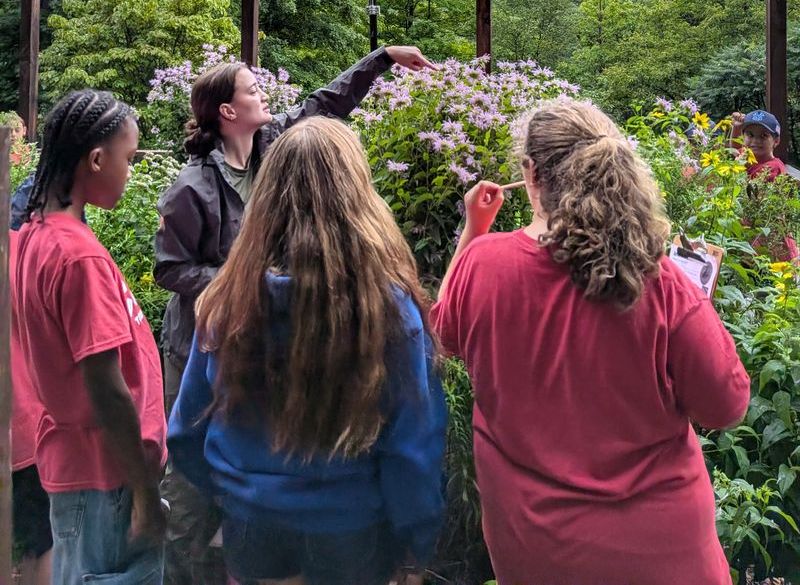
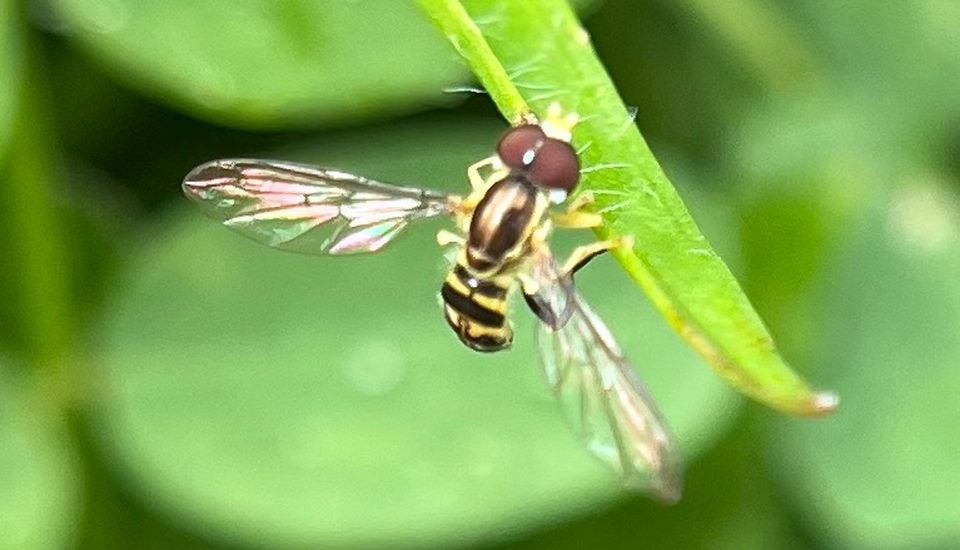
gelatinous matrices of spotted salamanders. Even in the comparatively cultivated environment of our sun and woodland gardens, we’re surrounded by the humming and thrumming of dozens of native pollinator species; a single plant might host a bee-mimic fly, an ant-mimic spider, and a hummingbird-mimic moth.
Students who come to our Forest don’t know that it’s unusual to pick up 35 bird species on Merlin during a half-hour bird walk, or haul up a trap full of painted turtles rather than invasive red-eared sliders, or sweep up dragonfly nymphs from all six Nearctic families with one pass of a net. It’s normal for them to hear a pair of barred owls hooting to each other across Aleck Meadow Reservoir. And that’s good. Visiting the Forest sets high standards for their expectations of the natural world: that it be rich with native species, free of pollution and litter, and respected by compassionate human beings.
—Flannery James, Environmental Educator, Black Rock Forest

The Forest Almanac
This season at Black Rock Forest was one of recovery. Since April, we have received 36.7 inches of rain, and the total is still climbing. It made for a great growing season and beautiful fall colors. The drought that stressed the Forest last fall has ended and the spongy moth outbreak of 2024-2025 is behind us.
The Forest’s health tells a more mixed story. After last year’s near-total lack of acorn production, our chestnut (Quercus montana) and white oaks (Q. alba) produced a decent crop, though black (Q. velutina) and red oaks (Q. rubra) did not. When we measured tree diameters, which reflect last year’s season, we found very little growth. That suggests the dry summer and fall of 2025 were hard on our trees. We have also noticed large oaks of every species dying, but the losses are patchy and our monitoring data show that these are isolated occurrences. Beech leaf disease remains present, and we are beginning to lose beech trees (Fagus grandifolia). We are encouraged that our restoration efforts in beech stands are doing well, as many of the native trees we planted in 2025 are thriving.
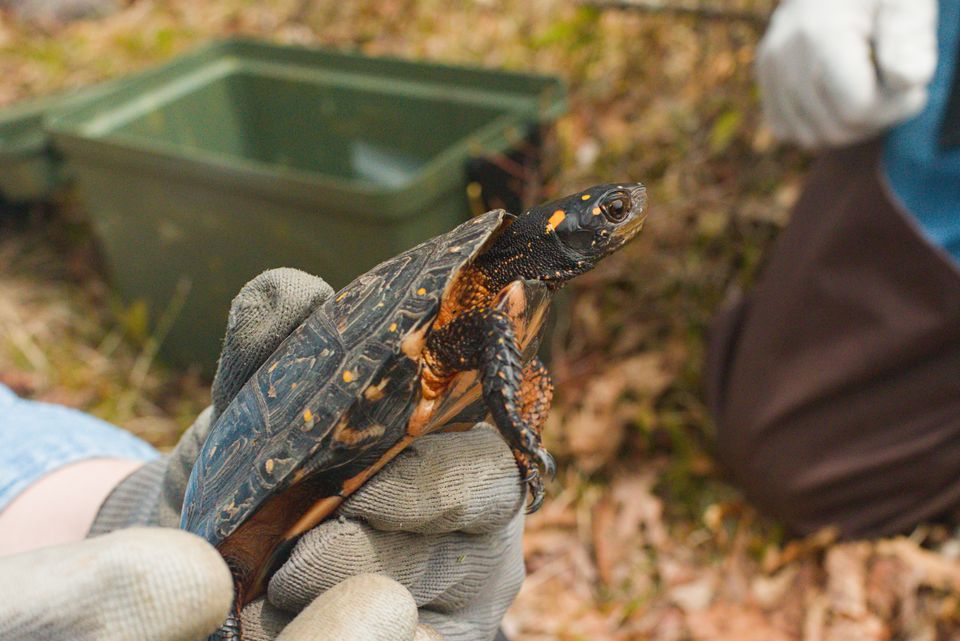
Understanding how wildlife responds to these changes is challenging. Our annual winter camera surveys produced our lowest detections of mammals since we started in 2018: only 62% of the annual mean of 6,395 detections. Our data sets are ideal for exploring whether this presumed decline in mammal activity is due to climate, tree loss, or a practically zero acorn mast. This summer marked the launch of three new long-term protocols for monitoring our reptiles and amphibians: a revamped survey for the rare spotted turtle (Clemmys guttata), the installation of 26 artificial coverboards for salamander surveys, and what we hope is a long-term collaborative effort to estimate our timber rattlesnake (Crotalus horridus) population.
This year we added new tools to our toolbox for managing invasive plants and protecting the forest. We released the biocontrol weevil Rhinoncomimus latipes to help eradicate mile-a-minute weed (Persicaria perfoliata). This weevil has
been approved for use in the US since 2004 to reduce the vine’s spread. We also began using a new heated, organic foam along roadsides to reduce Japanese knotweed (Fallopia japonica). Alongside these new methods, we had a lot of help from volunteers and students who pulled weeds by hand, our traditional method. Together, these approaches help us keep the Forest’s understory native and diverse.
Our observer community has also been out in force. The phenology volunteers have been recording the timing of leaf-out, flowering, and other seasonal events through the USA National Phenology Network. Their observations help us understand how the Forest responds to changing weather from year to year. It was also a great year for documenting the Forest’s diversity. Our Biodiversity of Black Rock Forest project on iNaturalist now holds over 8,000 observations and 1,700 species identified, along with a wonderful collection of photographs. If you visit the Forest, we invite you to add your own.
Managing a forest through a changing climate is a long-term commitment. A wet year is welcome relief, but the effects of past stress, like slow tree growth and oak mortality, can linger. Through careful monitoring, science-based action, and the support of volunteers and supporters like you, we are working to keep Black Rock Forest resilient, diverse, and beautiful for generations to come.
Rooted in a Century of Science

Picture a fourth grader crouched on a trail, completely still, watching a bright orange red eft cross the leaves. In that moment, they aren’t just seeing a salamander. They are becoming scientists.
That moment happens every day at Black Rock Forest, and it has been for nearly 100 years. In 1927, Dr. Ernest Stillman set aside these woods for a bold idea: that a forest could be a laboratory where science, education, and conservation grow together. Next year, we celebrate a century as a research forest.
This year, thousands of students and researchers explored and learned from the Forest. Our staff and volunteers restored trails, removed invasive species, and tracked the wildlife and plants of the Highlands. None of it happens without people like you.
Generations of scientists have measured these trees and monitored these streams, building one of the nation’s longest continuous records of ecological change. It shows us how forests respond to a changing climate, and it inspires young people to become the next generation of scientists and stewards. At a time when support for science and education is uncertain, your year-end gift keeps this work going.
“The best way to raise a generation of stewards for the environment is to let them experience, first-hand, how incredible it is. By experiencing the beauty, asking questions, discovering new things, and getting muddy, students develop an affinity for the environment that will stay with them throughout their life.”
— Serena Ayers, science teacher at The Storm King School
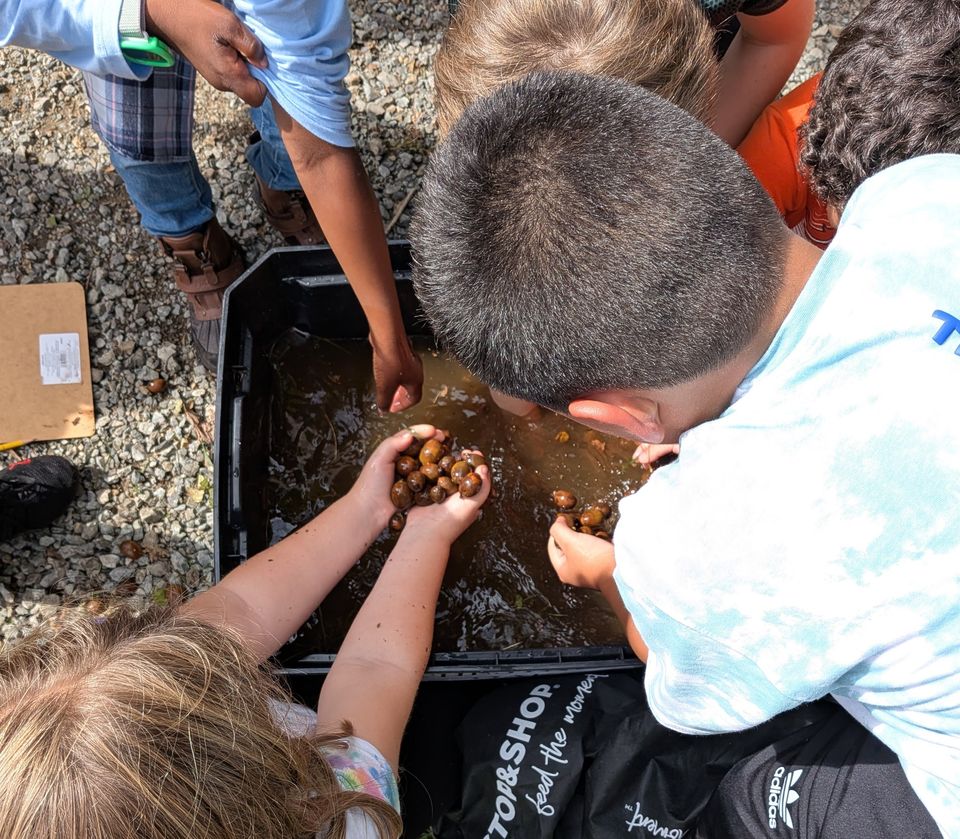
“The coolest thing I learned about nature was that macroinvertebrates are a thing. I want to learn more about them.” — 7-year-old Black Rock Forest summer science participant
“Black Rock Forest offers an unparalleled opportunity to conduct my research on nutrient cycling in northeastern forests and contribute to collaborative science.”— Georgia Fisher, graduate student at Columbia University in Ecology, Evolution, and Environmental Biology
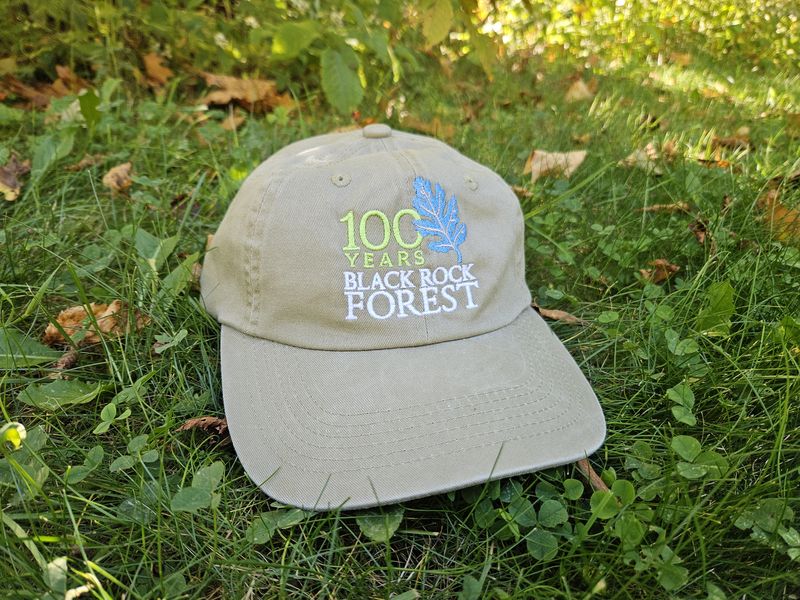
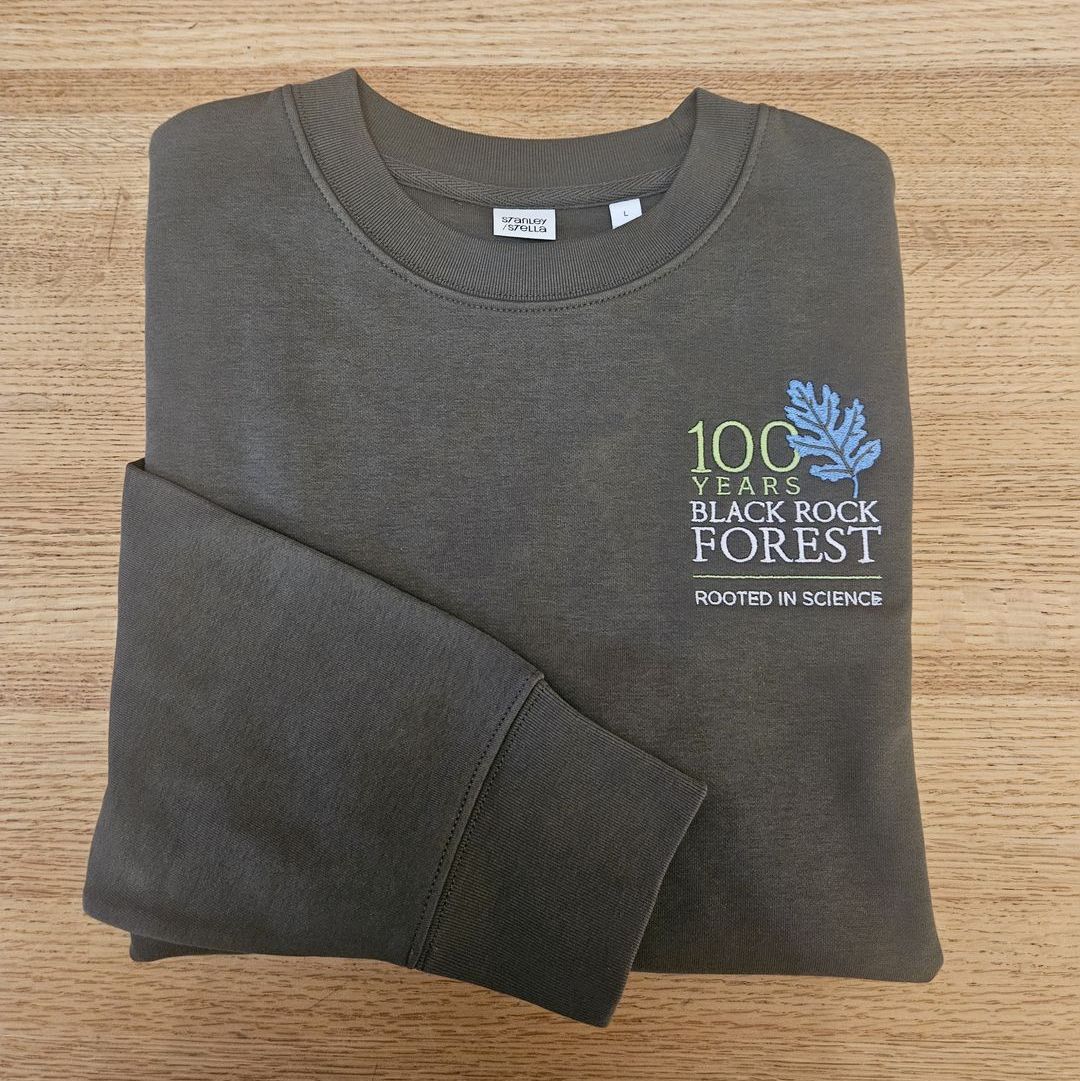
This is also a special year. As we celebrate our centennial, there’s a new logo, new Black Rock Forest merchandise, and more events throughout the Forest. We’d love for you to be part of it all, whether you hike a trail, join an event, or help us spread the word.
As a thank-you, everyone who gives $150 or more by December 31 will receive a Black Rock Forest calendar, and all Centennial Friends will be recognized as part of the generation that carried this Forest into its second century.
Thank you for being part of Black Rock Forest.
With gratitude,

Isabel Ashton, PhD
Executive Director, Black Rock Forest

Forest News in Brief
Solar Energy
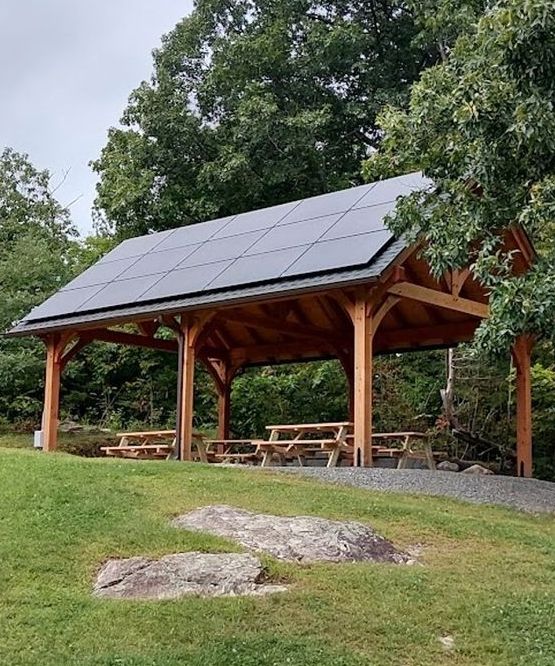
New solar panels on the picnic pavilion, installed this summer, now supply more than one-third of the Science Center’s daily electricity use. The pavilion and solar panels were funded in part by a grant from the Zoos, Botanical Gardens & Aquaria Capital Grant Program, administered by the New York State Office of Parks, Recreation and Historic
Preservation.

Upcoming Events
There’s always something happening
at Black Rock Forest. Coming up, join us for a history talk at the Stone House (November 14th) or for a winter solstice walk (December 21st). Follow us on social media and subscribe to our newsletter so you never miss a hike, lecture, job opening, or other fun event.
The Moon Tree has (finally) landed!
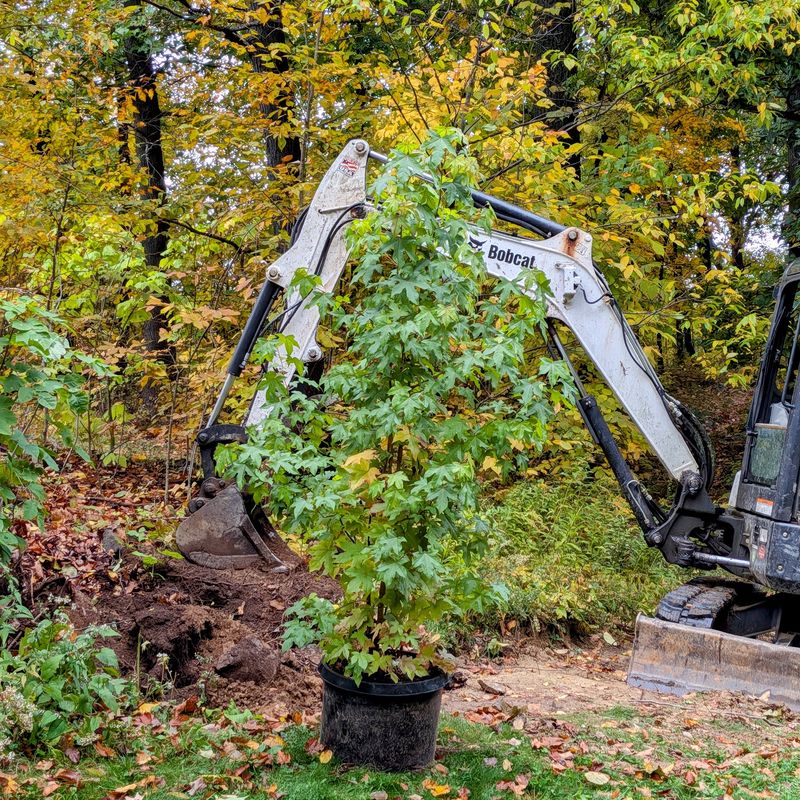
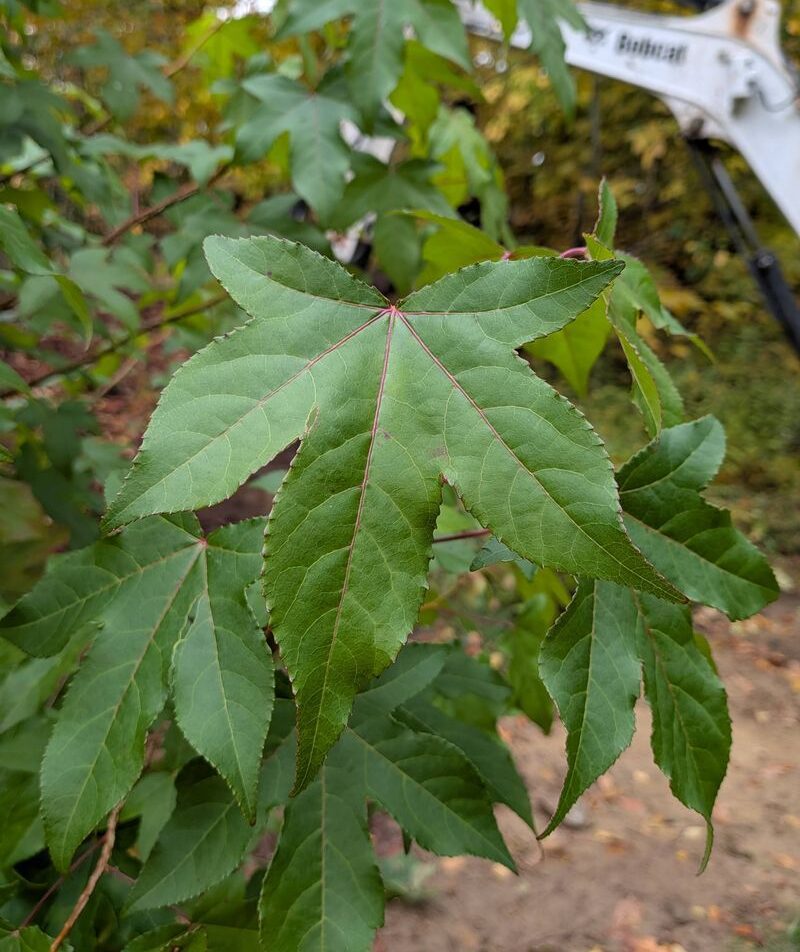
Did you know that Black Rock Forest is an official Artemis I Moon Tree Steward? NASA and the USDA Forest Service partnered to send seeds to space on the Artemis I mission in 2022. After the seeds were germinated by the Forest Service, we were granted one in November 2024, to inspire more interest in space exploration and science. Our Moon Tree is an American sweetgum (Liquidambar styraciflua) that is now planted by the new solar picnic pavilion.
Thanks!
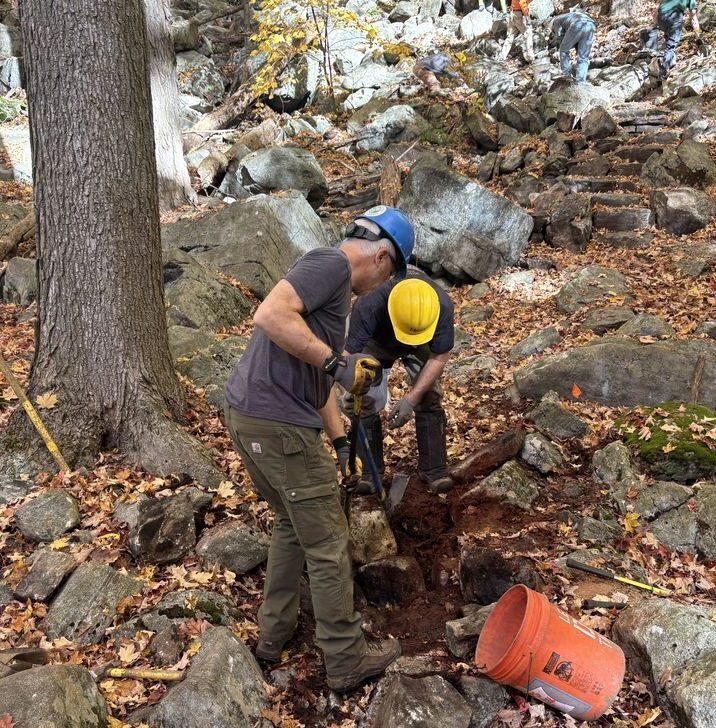
A huge thanks to the Hudson Nor’westers Trail Crew from the New York-New Jersey Trail Conference for rebuilding a steep section of the Scenic Trail. Eleven volunteers have already put in more than five weeks of work, and the project is still ongoing. Their efforts reduce erosion, stabilize the soil, and protect natural resources. It also creates a better experience for hikers.
New Black Rock Forest Gear
Show your love for the Forest with our new Centennial merchandise, now available on our website. Every purchase supports research, education, and conservation at Black Rock Forest.